
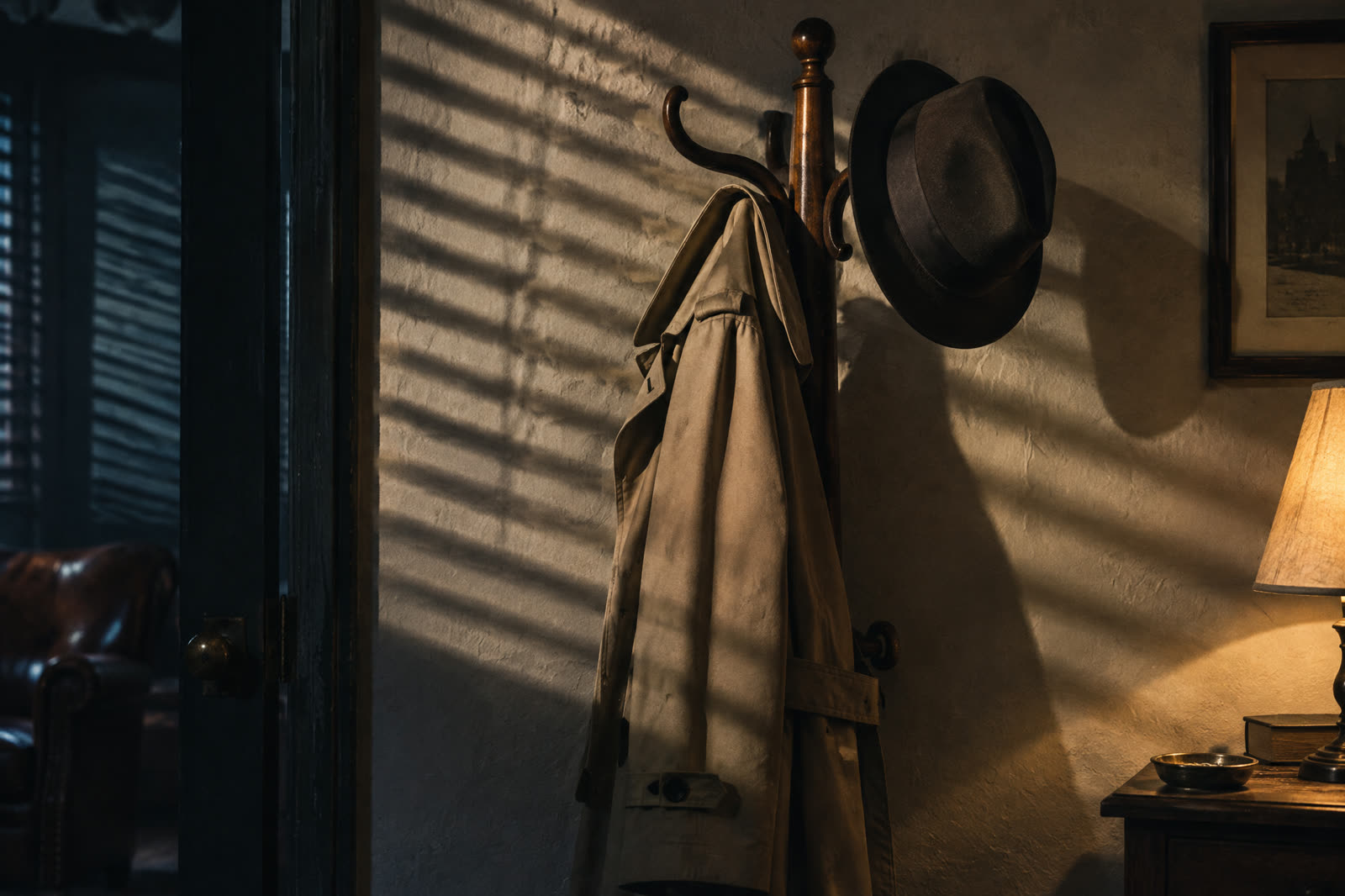
Name another job that has owned this much of the culture for this long. Not cop — the private detective: the outsider with a code, working the case the system gave up on. He’s been in print since 1887, on the radio by the thirties, in every decade of film and television since, and he’s in your head right now whether you invited him or not. When someone walks into my office, they’ve already met a hundred versions of me. None of them kept a case log.
It’s worth taking the archetype seriously, because it shapes what people expect when they hire the real thing.
The reasoning machine
It starts with Holmes. Conan Doyle built the figure everyone since has been arguing with: the detective as pure intellect, reading a stranger’s biography off a hat brim. “When you have eliminated the impossible, whatever remains, however improbable, must be the truth,” Holmes says — and it’s a gorgeous line, and no working investigator would ever stake a case on it. You can’t enumerate the impossible. The real version of that sentence is slower and humbler: eliminate what the evidence won’t support, and be suspicious of how much you like what’s left.
What Holmes got permanently right, though: observation is a discipline, not a gift. He looks where other people glance. That part of the myth is just the job.
The knight in a dirty trench coat
Then the forties happened, and the detective walked out of the drawing room into the rain. Chandler’s Marlowe, Hammett’s Spade, and three generations of noir gave the archetype its moral architecture: the private eye as the last honest man in a crooked town, paid badly to learn things powerful people wanted buried.
That version lives deepest in the culture — Chinatown is its scripture — and it’s the one I have the most complicated relationship with. The cynicism is a costume, but the posture underneath is real: a defense investigator genuinely is structurally independent, working for the one party in the room whose version nobody official is funded to check. Noir overstates the loneliness and underrates the paperwork, but it understands the assignment.
The man who seemed harmless
And then there’s Columbo — the finest piece of investigative fiction television ever produced, and the only one that’s basically a training film. The rumpled coat, the apologies, the “just one more thing” at the door: it’s all one technique. Let the subject believe they’re smarter than you, and they will talk, and talk, and hand you the thread.
Every working investigator has a little Columbo in their kit. People tell the harmless man everything.
What the archetype costs
Here’s what a century of detective fiction trained the public to believe: that cases break on hunches, that the investigator’s gift is intuition, and that the ending comes as a confession in a drawing room. The real work runs on the opposite engine — neutrality instead of hunches, timelines instead of twists, and documentation instead of drama, because nothing a fictional detective does would survive the one question every real conclusion must answer: explain the steps you took to arrive at it.
The myth sells the genius. The work is a method, logged in real time, that a jury can follow without squinting.
But I won’t pretend the archetype and I aren’t related. Patience, observation, skepticism of the official story, loyalty to what’s actually true — fiction got the virtues right and the workflow wrong. If Marlowe had kept exhibit-ready files, he’d have been unstoppable.
If you need the real thing — slower than Holmes, better documented than Marlowe, roughly as rumpled as Columbo — you know where the office is.