
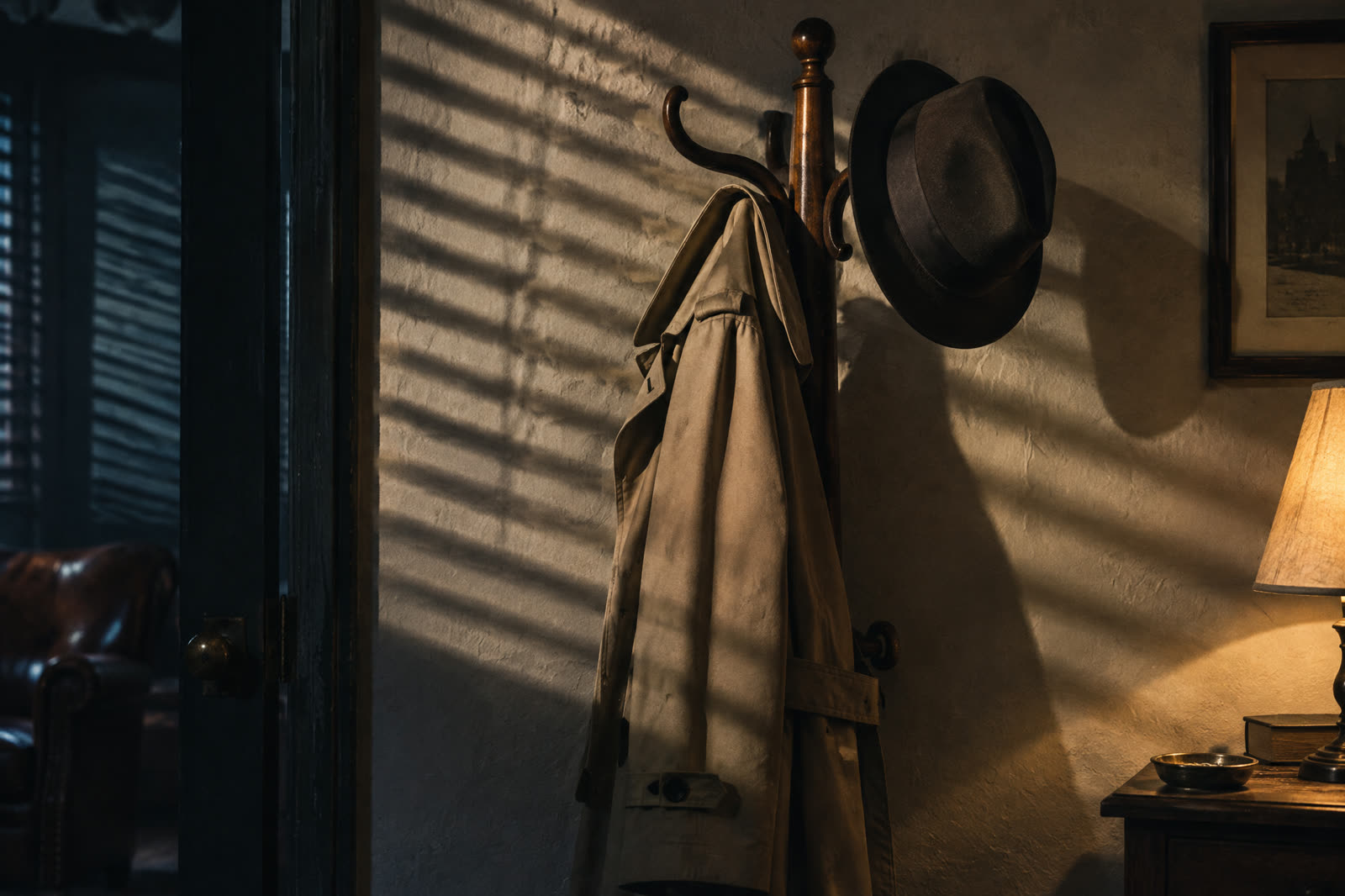
The television private investigator is a magnificent animal: wisecracking, frequently concussed, forever three steps ahead of a police department that inexplicably tolerates him. The working Oregon investigator is a different species that happens to share a name. For the curious, a field guide to telling them apart.
The badge
The TV PI flashes something gold at a doorway and walks in. The real Oregon investigator carries a license — issued by the state Department of Public Safety Standards and Training, verifiable by anyone in a public lookup — and no badge at all, because flashing badge-shaped objects at people is how a licensee becomes a former licensee. Real investigators identify themselves honestly. It works more often than you’d think, which is the kind of trade secret this column gives away for free.
The lockpicks
On television, a locked door is an invitation and a lockpick set is standard equipment. In Oregon, entering someone’s property without permission is called trespass, or burglary if the writers are feeling ambitious, and evidence gathered that way is poison to the very case it was meant to help — along with the career of whoever gathered it. The real investigator’s tools for locked doors are patience, public records, and the radical technique of asking someone who has a key. Less cinematic. Far more admissible.
The wire
The TV PI tapes a microphone to his chest and secretly records everyone he meets. Oregon law has opinions about this. Recording conversations here is governed by statute, with different rules for phones and in-person talk, and the in-person rule generally requires that people be informed. The real investigator makes recording decisions deliberately, on the right side of the law, because an unlawful recording is not evidence — it is a confession with production values.
The car chase
Television surveillance is a car chase with commentary. Actual surveillance is sitting still so long that your coffee becomes a legal entity, documenting arrivals and departures with timestamps, and leaving before anyone wonders about the sedan. The dramatic version loses the subject, burns the operation, and possibly a stop sign. The dull version produces a log that stands up in court. Dull wins.
The bail bondsman sidekick
The TV PI’s world is thick with bail bondsmen — gravelly fixtures who post bond and occasionally hire our hero to drag a skip back across state lines. Oregon wrote that whole character out of the script in the 1970s, when it dismantled commercial bail entirely; it remains one of the few states with no bail bondsmen at all. Release here runs through the court: recognizance, conditions, or a deposit paid to the clerk. The bounty-hunter subplot is not merely unlikely in Oregon. It is unemployed.
The interrogation
On television, the PI corners a suspect and extracts a confession through charisma and threats, in that order. In reality, a defense investigator conducting witness interviews has no authority to corner anyone — people talk voluntarily or not at all — and the goal isn’t a dramatic confession but an accurate, documented statement that reads the same in court as it did in the doorway. The investigator who pressures a witness hasn’t cracked the case. He has manufactured the cross-examination that unravels it.
The gunfight
The TV PI is in a firefight by the second commercial break. The real investigator’s most dangerous regular activity is driving rural highways to interviews, and an engagement that produces any excitement at all is an engagement that gets rescheduled. The work is deliberately boring. Boring means nobody got hurt and the file got built.
The fee
The TV PI quotes a mysterious day rate, waives it when the client cries, and is paid in the end with a meaningful look. The real one scopes the matter, estimates the cost up front, and puts it in writing before work begins — a practice that would make for terrible television and makes for excellent working relationships.
The montage
On screen, records arrive in a montage: three keystrokes and the whole file glows on the monitor. In the field, a locate is not a database hit, records custodians answer in weeks, and the glowing monitor mostly displays request-status pages. The real montage is a calendar. This is, incidentally, why real investigators keep saying “the earlier the better” — not for drama, but because the boring machinery takes time to turn.
The case that ends
Television cases end with the culprit confessing on a rooftop. Real cases end with a report: organized, sourced, written so it holds up when someone paid to break it has a turn. No rooftop. The report is the point — it is the thing the attorney argues from, the court weighs, and the client actually paid for. The TV PI solves mysteries. The working investigator documents facts, which turns out to be both less romantic and more useful to anyone with a case number.
In fairness to the magnificent animal: the shows get one thing right. Somebody really does have to go find out what happened — knock on the door, pull the record, sit through the boring hours. That part survives contact with reality. The trench coat is optional, the methods are lawful, and the results are written down.
If your matter needs the real kind, the conversation costs nothing — and the questions page covers what people usually ask first.